
TRIBU-CR Is Here: Costa Rica Taxes Go Digital
TRIBU-CR starts Oct 6, 2025. What changes, what doesn’t, and a simple 10-minute checklist for expats on rentals, brackets, and filing.
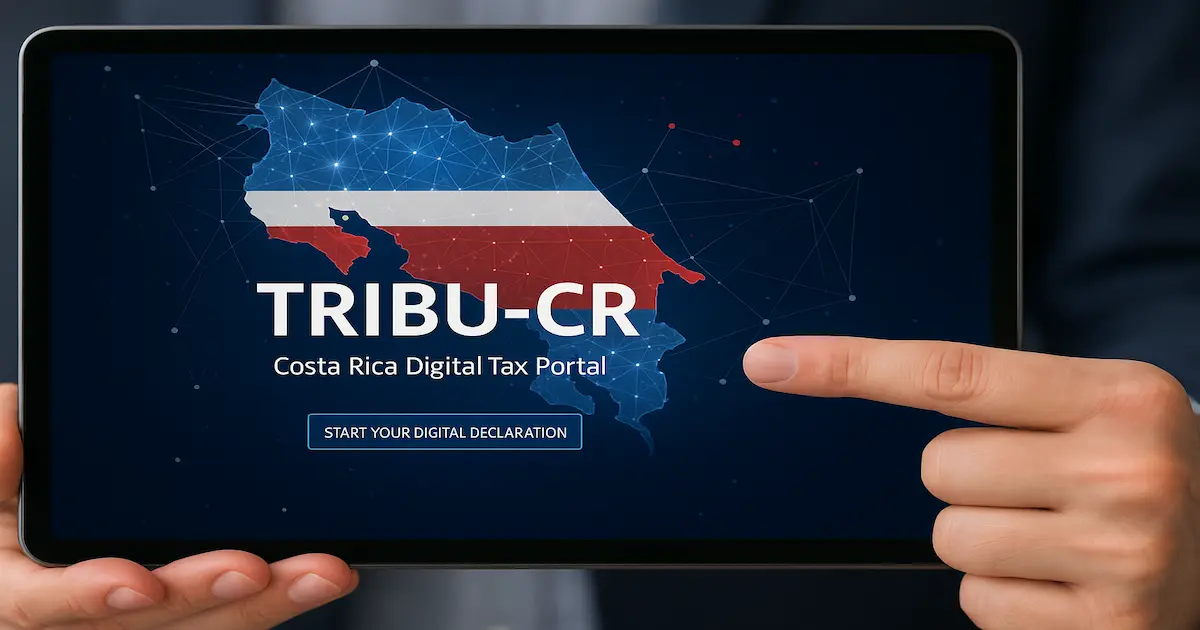
If you’re living in Costa Rica—or planning to—2025 brings one big change you should know about. Don’t worry: it’s mostly about how you file and pay, not what you owe. This guide explains the essentials in plain language, with simple steps to keep you compliant and stress-free.
A New Tax Platform Starts October 6, 2025
Costa Rica is turning on a modern online tax system called TRIBU-CR on October 6, 2025. Think of it as moving from an old filing cabinet to a clean, organized digital dashboard.
- Old systems shut down: ATV, TRAVI, and other older sites are being replaced.
- Key Dates:
- September 25, 2025 (late night) — Data from old systems is frozen and migrated.
- October 6, 2025 — TRIBU-CR goes live. You’ll create a new account and confirm your contact details.
- October 24, 2025 — Special due date to file September VAT (for those who charge VAT) inside the new system.
- Bonus: a free e-invoicing tool (Tico-Factura) launches alongside TRIBU-CR.
What Did Not Change in 2025: The Rules for Expats
Costa Rica still uses the territorial system. In simple terms:
- Costa Rica taxes income earned in Costa Rica.
- Foreign income (pensions from abroad, investment income from accounts outside Costa Rica, salaries paid abroad) is not taxed in Costa Rica.
This is one reason many retirees feel comfortable here. You may still have filing duties in your home country (for example, U.S. citizens), but Costa Rica won’t tax your foreign pension.
Who Is a Tax Resident?
You’re generally a tax resident if you spend more than 183 days in Costa Rica during the tax year.
- Residents: file an annual return for Costa Rica-sourced income (the income you earn here).
- Non-residents: local payers often withhold tax at a fixed rate when they pay you for Costa Rican work, so you may not need to file for that specific income.
If you’re retired and only receiving a foreign pension, you usually won’t have Costa Rica-source income to report.
What Counts as Costa Rica-Source Income?
Here are common examples that are taxable in Costa Rica:
- Wages for work performed in Costa Rica
- Fees for services to clients in Costa Rica
- Profits from a business operating here
- Rent from property located in Costa Rica
- Interest/dividends paid by Costa Rican entities
- Capital gains from selling Costa Rican assets (e.g., local real estate)
If you do any local work or rent out your Costa Rican home, you’ll need to declare that Costa Rica-source income—even if you’re a retiree.
2025 Tax Brackets (In Brief)
Two groups to keep in mind:
1) Salaried employees (monthly payroll in Costa Rica)
- The tax-free amount for 2025 is ₡922,000 per month.
- Above that, rates rise in steps: 10%, 15%, 20%, 25%.
- This is a small change from 2024 due to a routine annual adjustment.
2) Independent workers (self-employed, consultants)
- For 2025, the current deflation-adjusted table applies.
- Good news for 2026: a new law raises the tax-free annual amount to ₡6,244,000 starting in 2026. That’s next year, but useful for planning now.
Property Owners: What to Know
Long-term rentals (month-to-month or longer)
- Treated as “real estate capital income.” After a standard expense deduction, the effective tax is about 12.75% of gross rent.
Short-term rentals (under 30 days)
- You must charge 13% VAT, issue electronic invoices, and file monthly.
- Heads-up for 2026: the government has announced a new approach for platform rentals (Airbnb/Vrbo) with an effective 12.75% on gross collected through platforms. For 2025, keep following the current VAT process.
Annual local property taxes
- The municipal property tax is 0.25% of the registered value. Budget for it yearly.
Luxury Home Tax (Impuesto Solidario)
- Applies to higher-value homes once the official threshold is passed (the threshold updates annually). Due mid-January.
Selling property (capital gains)
- Standard 15% on the gain.
- If you bought before July 1, 2019, you may choose a one-time 2.25% of the sale price instead—often helpful for long-held homes with large appreciation.
- If the seller is non-resident, the buyer withholds a small percentage at closing and remits it to the tax authority.
Digital Nomads and Remote Workers
If you’re paid by a foreign employer to a foreign bank account for work you perform while living here, that income is generally foreign-source and not taxed in Costa Rica. Be careful not to mix in local gigs (those would be Costa Rica-source).
Keep clean records showing:
- Who paid you (foreign entity)
- Where the work was directed (outside Costa Rica)
- Where the money was deposited (foreign account)
Costa Rica also offers a digital-nomad stay option that confirms the foreign-income concept for the income you declare to qualify. If you pick up extra work beyond what you declared—especially local work—that may be taxed locally. Keep things clearly separated.
The Big “Maybe Later” Reform: Global Income Bill
You may hear about a proposed “Global Income” reform that would combine most local income types and, for companies, could tax some foreign passive income. As of 2025, this is not law. It’s a policy project under debate. If you hold investments through a Costa Rican company, keep an eye on this—but nothing changes for individuals in 2025.
Your 10-Minute TRIBU-CR Checklist
October 6, 2025
- Create your new TRIBU-CR account.
- Confirm your phone and email for two-factor codes.
- Update your RUT (registered contact and address information).
By October 24, 2025
- If you file VAT, submit the September return in the new system.
Ongoing (easy habits)
- Ask for and save electronic invoices for deductible expenses.
- If you rent out your property, keep a simple monthly folder with invoices, bookings, and payments.
- If you do any local work, use a separate bank account for that activity—it makes reporting much easier.
Bottom Line
- 2025’s big change is the new online system (TRIBU-CR), not a new tax on your foreign pension or investments abroad.
- If you don’t earn money in Costa Rica, you likely won’t owe Costa Rican income tax.
- If you do have Costa Rica-source income (rentals, local work, a small business), the rules are clearer, filing is more centralized, and records matter more than ever.
- Plan ahead for 2026 if you’re self-employed (higher exemption coming) or run short-term rentals (platform rules expected).