Costa Rica Border Checklist: How to Maximize Your Stay
Worried about losing days on arrival in Costa Rica? This practical border checklist shows you what to bring, how to present it, and how solvency is checked so you have the best chance at receiving the maximum stay allowed under the new rules.
Costa Rica’s new immigration guidelines mean one thing: how long you can stay now depends heavily on your preparation at the border. Arrive disorganized, and you risk a short stamp that cannot be easily reset.
If you have not read it yet, start with our overview of the new rule: Don’t Lose Your 180-Day Visa in Costa Rica.
This guide gives you a simple, print-and-pack checklist so you arrive organized, calm, and respectful of the system—and give yourself the best chance at receiving the maximum stay allowed, up to 180 days.
1. What Immigration Officers Need to See
At the counter, immigration officers are mainly checking three things:
- Identity—who you are, and that you are admissible.
- Solvency—that you can support yourself for the stay you want.
- Departure—that you intend to leave before your days run out.
There is never a guarantee of 180 days. But if your documents answer those three questions clearly, you give yourself the best chance.
2. Passport and Core Travel Documents
Keep these together in one easy-to-reach folder.
2.1 Passport
- Valid for at least 6 months beyond your entry date (check your country’s exact rule).
- One or two blank pages.
- Old passports with valid visas, if relevant.
Check this at least a month before you travel so there is time to renew if necessary.
2.2 Return or Onward Ticket
Costa Rica normally expects proof you will leave within the period you request.
Common examples:
- Round-trip airline ticket.
- One-way ticket into Costa Rica plus a confirmed ticket out to another country.
- Confirmed international bus tickets (for example, TicaBus or Nicabus) showing a paid departure date to another country. Note: “Reservations” without payment are often rejected.
Get clear, practical insights on life and business in Costa Rica.
Join our free weekly newsletter — ad-free, spam-free, and trusted by expats, investors, and retirees across Costa Rica.
2.3 Lodging and Contact Details
You should be able to answer “Where are you staying?” immediately.
Bring:
- First night’s hotel or rental confirmation.
- For longer stays: a short summary of planned lodging (for example, “First month in San José, then long-term rental in Guanacaste.”)
- Host’s full name, address, and phone number if staying with friends or family.
3. Solvency: Proving You Can Afford Your Stay
Solvency is now central. It is one of the main reasons an officer might limit your days.
In many cases, immigration will think in terms of a daily amount multiplied by the days requested. The longer you want to stay, the clearer your financial proof should be.
3.1 Useful Forms of Financial Proof
Bring more than one of the following:
- Bank statements (last 3 months).
- Pension or Social Security letters.
- Investment or savings account summaries.
- Credit card statements with available credit limits visible.
- Letters confirming ongoing foreign income (see Section 5.1).
Print only the key pages and highlight balances and monthly income.
3.2 Make It Easy to Understand
Officers have limited time. Present the essentials clearly:
- Group solvency documents in a section labeled “Financial Solvency.”
- Add a one-page cover sheet with:
- Your main income sources and approximate monthly total.
- Savings available.
- Number of days requested.
Example text for the cover sheet:
“I am requesting 180 days and can support myself with a monthly pension of $2,400 plus savings of $15,000, as shown in the attached statements.”
You are not arguing your case; you are presenting facts in an orderly way.
4. Health and Travel Insurance
Requirements can change, but arriving with proof of coverage is a sign of responsible planning and solvency.
Bring:
- A certificate or confirmation PDF from your insurer.
- Basic details visible:
- Coverage in Costa Rica.
- Emergency medical and hospital coverage.
- Coverage dates.
Even when not explicitly required, insurance supports the overall picture that you will not be a burden on the system.
5. Special Situations to Prepare For
5.1 Proof of Foreign Income & Economic Stability
Many visitors now have income from pensions, investments, or work performed online for foreign companies. For immigration, the key point is economic stability, not your job title.
Consider bringing:
- A short income letter from your pension provider, employer, or main client confirming:
- That you receive a stable monthly income.
- The approximate amount.
- That it is deposited into your account outside Costa Rica.
Example:
“This letter confirms that [Name] receives a monthly income of $X, deposited into account [number] on a recurring basis.”
The purpose of this document is proof of ongoing income, not a work permit. Do not misrepresent your situation, but you do not need to volunteer long explanations about working while in Costa Rica unless you are asked. If you are, answer truthfully and keep the focus on solvency, not local employment.
5.2 Families Traveling with Children
For minors, officers may look closely at custody and safety.
Bring:
- Passports for each child.
- Birth certificates (copies usually sufficient).
- If traveling with only one parent: a notarized authorization letter from the other parent, if your situation requires it.
- School enrollment or homeschooling letters for longer stays, if available.
5.3 Long-Stay “Snowbirds” and Retirees
If you spend most of the year in Costa Rica but keep entering as a tourist:
- Expect more scrutiny of your past entries and exits.
- Be ready with strong solvency proof and clear plans.
- Consider whether it is time to explore residency options (pensionado, rentista, investor).
If you already own property in Costa Rica, keep your records current and organized. You can download your property records directly from the National Property Registry—we explain how in this guide:
The RNP: Costa Rica’s Online Property Registry.
The new rules quietly encourage long-term visitors to move toward formal residency rather than endless tourist entries.
Expert guidance for expats in Costa Rica.
Join our free weekly updates—practical, ad-free, and easy to read.
6. How to Speak to the Officer
Good documents help. Clear, calm communication helps just as much.
6.1 Keep It Short and Respectful
- Greet the officer.
- Hand over your passport and keep your folder ready but closed.
- Answer questions in brief, honest sentences, for example:
- “I plan to stay six months in Guanacaste in a long-term rental.”
- “Here are my pension and savings statements to support that stay.”
Avoid long stories, complaints, or pressure. The officer decides. Your job is to make that decision straightforward.
6.2 How to Mention 180 Days
You may calmly say:
“If possible, I would appreciate 180 days. I have my return ticket and financial proof for that period.”
Then stop. Do not insist or argue. The officer may review your stamps and documents and act accordingly.
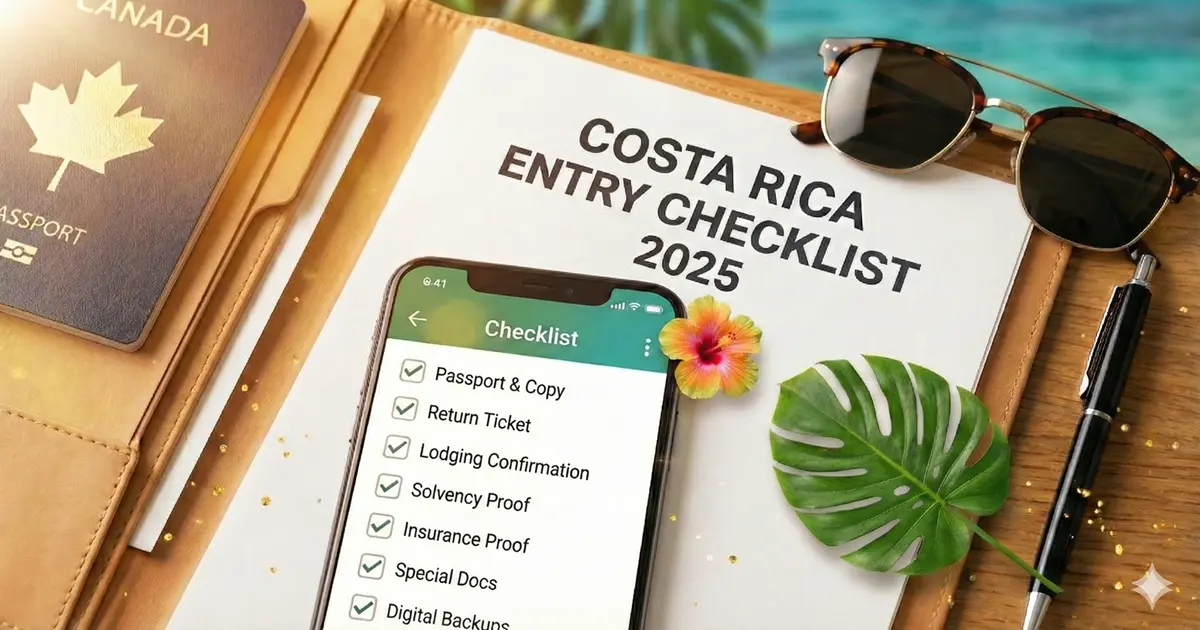
7. Quick Border Checklist (Print and Pack)
You can copy this list into a one-page document and keep it with your passport.
Identity & Travel
- [ ] Passport valid for at least 6 more months
- [ ] Copy of passport photo page
- [ ] Return or onward ticket within requested stay
- [ ] First lodging confirmation and address
Financial Solvency
- [ ] Bank statements (last 3 months)
- [ ] Pension/Social Security or income letter
- [ ] Savings or investment summaries
- [ ] Credit card statements (available limit visible)
- [ ] One-page solvency cover sheet
Health & Insurance
- [ ] Travel/health insurance proof
- [ ] List of emergency contacts
Special Situations
- [ ] Marriage certificate (if needed)
- [ ] Birth certificates for children
- [ ] Authorization letter if traveling with minors and one parent absent
- [ ] Income confirmation letter (for ongoing income from abroad)
When a Tourist Stay Is No Longer Enough
If you are constantly counting days, planning exits, and building thicker document folders each year, that is a signal.
You may be better served by:
- Choosing a residency path that fits your situation.
- Regularizing your status if you truly live here most of the year.
- Planning calmly instead of worrying at every border crossing.
Residency is simply a more stable, predictable way to live in a country you love.
Final Takeaway and Call to Action
Costa Rica still welcomes visitors, but it expects them to be organized. A simple document folder, clear solvency proof, and calm, respectful communication can make the difference between a short stamp and a full, longer stay.
If you are unsure how the new rules apply to your specific case—snowbird, remote worker, or long-stay retiree—we can help you think it through. Email us for quick answers.